
Crypto never closes, so the idea of a program that trades for you while you sleep is appealing. Automated crypto trading promises speed, discipline and no emotional mistakes. Some of that is real. Some of it hides risks that only show up after money is already on the line.
This guide breaks a trading routine into parts and asks a simple question about each one: should a machine do this, or should you? Not financial advice. Crypto is volatile, and any trade can lose money, automated or not.
MaxTrade is an AI trade-setups app. It does not place orders or hold exchange keys, and it covers NASDAQ, NYSE, LSE, NSE India, PSX, Tadawul, ADX, DFM, QSE, and crypto via Binance.
What automated crypto trading means
Automated crypto trading is any setup where software takes over part of the work a trader would do by hand. That can be as small as a price alert on your phone or as large as a bot that opens and closes leveraged positions on Binance with no human check.
The word "automated" covers very different things. Lumping them together is how people end up giving full trading access to a tool when all they wanted was a reminder that BTC reached a level. Before choosing any tool, decide which part of the job you want help with.
A typical trade has six steps: scanning the market, finding an idea, planning entry, stop and targets, sizing the position, placing the orders, and managing the trade until it closes. Each step can be automated to a different degree.
Four levels of automation
It helps to think in levels, from least to most control handed over:
- Alerts. Software watches price and tells you when something happens. You decide everything else.
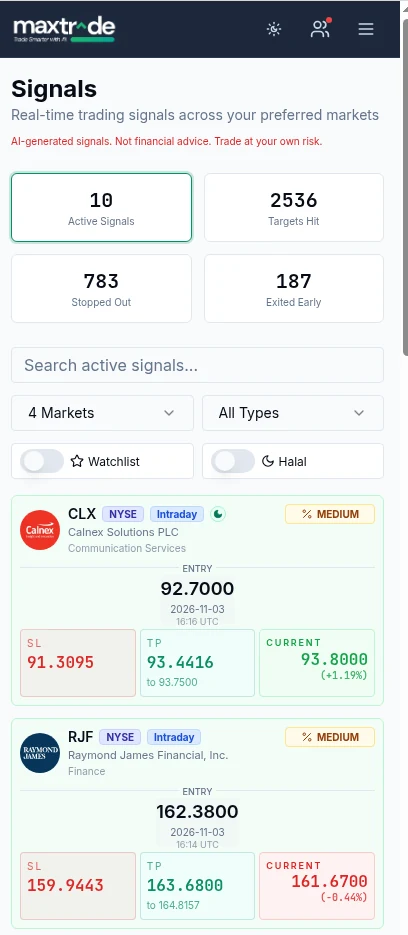
- Trade setups. Software, often with AI, scans many pairs and writes a full plan: pair, direction, entry, stop loss and targets. You still decide whether to act and place the order yourself.
- Order helpers. You place the trade, and the exchange handles the exits with resting stop-loss, target or OCO orders. The plan is yours, the execution of exits is automatic.
- Full bots. A program connected to your exchange account by API keys decides, enters, exits and repeats with no human approval.
Levels one to three keep a person in the loop. Level four removes the person. Most of the risk in automated crypto trading sits in that last jump.
What is worth automating
Some jobs are boring, repetitive and easy for a machine. Handing them over usually makes a trader better, not worse:
- Scanning. No person can watch hundreds of Binance pairs around the clock. Software can, and it does not get tired at 3 AM.
- Price alerts. Set an alert at your entry zone instead of staring at the chart. You check the screen only when it matters.
- Exit orders. A resting stop-loss and target order protect a position while you sleep. This is the single most useful form of automation for most people.
- Position-size maths. A calculator that turns your risk amount and stop distance into a position size removes a common source of mistakes.
- Record keeping. Logging every trade with entry, exit and reason is tedious by hand and easy for software.
Our guide to reading Bitcoin trade setups on Binance shows how the entry, stop and size fit together, which is exactly the part that alerts and exit orders support.
What should stay manual
Other parts of the job depend on judgment, context and limits that only you know:
- The decision to take a trade. Your account size, other open positions, upcoming news and how you feel that day all matter. A program does not see most of them.
- How much you risk overall. Your total exposure across BTC, ETH and altcoins is a personal limit. Several linked longs can add up to one large bet.
- Leverage. Choosing whether to use futures and how much leverage is a risk decision, not a technical one.
- Stopping. Knowing when to step away after a run of losses, or when the market has changed character, is hard to code well.
- Withdrawals and account security. Moving money out of an exchange should always need you.
A sensible routine automates the watching and the protecting, and keeps the deciding with you.
Automated crypto trading bot risks
Full bots can work for experienced users who test them carefully. They also bring risks that a manual trader never faces:
- API key exposure. A bot needs keys with trading rights. If the bot provider or your device is compromised, someone else can trade your account. Never enable withdrawal permission, and limit keys by IP where the exchange allows it.
- Silent failure. A bot can lose its connection, miss a stop, or keep opening trades after a bug. Without monitoring, you may only notice when the balance has changed.
- Market regime change. A grid or trend bot built for one kind of market can lose steadily when conditions change. It will keep following its rules until you stop it.
- Leverage loops. A bot on futures can stack positions quickly. Liquidation can arrive faster than any human could react.
- Marketing claims. Screenshots of winning months tell you little. Ask for the full record, including losing periods, fees and slippage.
We cover API permissions and Binance bot setups in more depth in our guide to crypto trading bots for Binance.
Algo trading crypto: testing before you trust it
If you do decide to run an algorithm, treat it like a new employee on probation:
- Backtest honestly. Include fees, spreads and slippage. A rule that only works without costs does not work.
- Test out of sample. Check the rules on a period you did not use to design them. Over-fitted rules look perfect on old data and fail on new data.
- Paper trade or use a tiny size. Run it live with an amount you would not miss for several weeks.
- Set a hard loss limit. Decide in advance the drawdown at which you switch it off, and keep a manual kill switch.
- Review weekly. Compare what the bot did with what you expected. Surprises are a warning, even pleasant ones.
Choosing an automated crypto trading app
When you compare apps, ask what level of automation each one actually offers and what access it needs:
- Does it need exchange API keys, and with which permissions?
- Does it show a complete plan with entry, stop loss and targets, or only "buy" and "sell"?
- Can you see a public history of closed ideas, including losses?
- Can you turn it off instantly, and does it ever act without your approval?
- Does it cover the markets you trade, or only one exchange?
An app that answers these clearly is easier to trust than one that leads with returns.
Where MaxTrade fits
MaxTrade automates the research step and stops there. Its AI scans markets and publishes trade setups with entry, stop loss, TP1 and TP2, each with a status you can check later. For crypto it follows Binance pairs such as BTC/USDT and ETH/USDT. It does not connect to your exchange, does not hold API keys and does not place orders, so every trade decision stays with you.
The same card format covers stocks on NASDAQ, NYSE, LSE, NSE India, PSX, Tadawul, ADX, DFM and QSE. See how MaxTrade works, browse the crypto trade setups page, or read our guide to judging an AI crypto trading app.
Automate the watching and the protecting, keep the deciding, and size every position so a loss is affordable. Not financial advice.
Frequently asked questions
What is automated crypto trading?
It is using software to handle part of a trading routine, from price alerts and trade setups up to bots that place orders on an exchange through API keys. The level of control you hand over varies a lot between tools.
Is an automated crypto trading bot safe?
No tool removes market risk. Bots add risks of their own, such as exposed API keys, silent failures and rules that stop working when the market changes. Never enable withdrawal permission on API keys and keep a manual kill switch.
What parts of crypto trading should I automate?
Scanning, price alerts, resting stop-loss and target orders, position-size maths and record keeping are good candidates. The decision to trade, total risk, leverage and withdrawals are better kept manual.
How do I test an algo trading strategy for crypto?
Backtest with fees and slippage, check it on data you did not use to design it, run it with a very small size for several weeks and set a loss limit at which you switch it off.
Does MaxTrade trade automatically for me?
No. MaxTrade is an AI trade-setups app. It automates research and shows entry, stop loss, TP1 and TP2 for crypto via Binance and nine stock markets, and you place any order yourself. Not financial advice.
